According to what I have learned, GIF image is one of the forms of digital media expression, and it can be seen everywhere on the internet.


As shown above, I used the ImgPlay software to take a GIF image for my cat. I used this software for further editing, because I wanted to make it into a meme for chatting with friends on social platforms. Since this GIF image looks like the cat who is going to sleep, I wanted to make this picture in the place of the text “Goodnight”.


First of all, I clicked on the “Sticker” to add some stars and moon above the image. By controlling the appearance time of stickers, they can form a flickering effect.

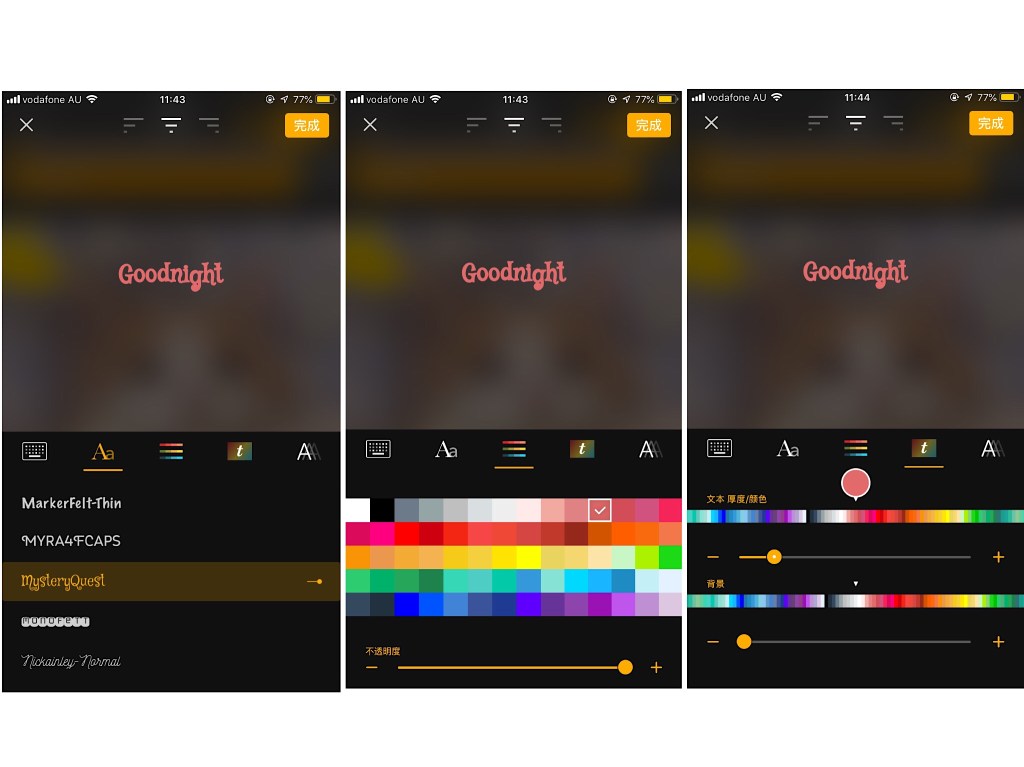

Then I added a “Goodnight” text, changed it into a cute typeface and chose a font color that looks comfortable. Moreover, I also adjusted the appropriate font size. I did this series because the text and content are continuously relevant (Lupton 2010, p.92). Therefore, we have to pay attention to text and typography.


In order to make the image have a better rendering effect, I used the software to add a filter to the GIF image.

After that, this picture was done. Although the process of this GIF image looks easy, it is full of knowledge and skills in digital literacy. In addition, I believe that mastering digital literacy skills is one of the important factors for the success of the contemporary generation.
In this digital age, people can process post-production through their mobile phone or computer, which are easy to operate and carry. We can unobtrusively capture and process images by using micro-cameras (Bate 2013, p. 81). It also means that we don’t need to buy professional cameras, film and other types of photography equipment, so everyone can play a role in cultural production (Benkler 2006, p. 276).
Overall, a file in GIF format is not only easier to access than video but also more vivid than text, which is more conducive to the emotional expression on social platforms.
Reference
Bate, D. 2013, ‘The Digital Condition of Photography: Cameras, Computers and Display’, in M. Lister (ed.), The Photographic Image in Digital Culture, 2nd edn, Routledge, New York, pp. 77-95.
Benkler, Y. 2006, The Wealth of Networks, 4th edn, Yale University Press, London, pp. 186-324.
Lupton, E. 2010, Thinking with Type, 2nd edn, Princeton Architectural Press, New York, pp. 85-100.
 Eleanor's blog