Submission 3 – [Digital Publishing]

Original video: https://www.youtube.com/watchv=J6eZGC5veio&feature=youtu.be

Final video:https://www.youtube.com/watchv=CgfO1FRYyug&feature=youtu.be

In the original video, I recorded a daily life fragment by segment shooting. In order to better understand how multimodality collaborates work, I implemented it by editing speed and adding audio in the video. Because I have taken many scenes, I need to put them into a continuous story. First of all, I use the “VUE” video editing software to adjust the video playback speed and cut off the extra parts.

After that, I found a copyright-free audio through this software and recorded some action sounds then added them to the video, so I combine the sound with images to show ‘synchronicity’. In fact, since most of the audios are copyrighted, improving copyright awareness can protect the music industry better and asking for author authorization or using audio with public copyright are good choices. In addition to this, we also need to know other copyright knowledge, such as image copyright, intellectual property and so on, because copyright can better protect the creators’ production and promote more people to innovate (Zemer, 2017, p.12).

Moreover, I added a filter to the video because bright colours can make the whole image more attractive. Finally, I added a border to the video that has a similar style to the camera to render it look like a short vlog overall. Actually, everyone can be a creator, which means that most people can do videos like this. Because the role and value of traditional literacy are increasingly marginalized with the popularity of digital literacy, digital literacy can be seen as essential survival skills and intellectual assets in the digital age (Eshet, 2004). Furthermore, as technology develops rapidly, pictures and videos can easily be made or edited by people through various tools, such as phones. In this way, both digital literacy and related devices have been integrated into people’s daily lives, so people can easily create and share videos.

Besides, with the emergence of various kinds of forms of videos and images on the Internet, I can feel the progress that participation culture brings to the media industry. The so-called participatory culture is that citizens use a variety of social media platforms to publish and share their own works, forming a new and interactive media culture (Jenkins, 2009, p.15). Therefore, as mentioned in the last paragraph, the barriers for people to produce media content is becoming lower, and it is easier to inspire them to actively participate in the information dissemination process instead of passively receiving information.

Reference:

Zemer, L. 2017, The idea of authorship in copyright, Routledge, London.

Eshet, Y. 2004, ‘Digital literacy: A conceptual framework for survival skills in the digital era’, Journal of educational multimedia and hypermedia, vol. 13, no. 1, pp. 93-106.

Jenkins, H. 2009, Confronting the challenges of participatory culture: Media education for the 21st century, Mit Press, Cambridge, Massachusetts.

Submission 2 – [Digital Publishing]

According to what I have learned, GIF image is one of the forms of digital media expression, and it can be seen everywhere on the internet.

Original

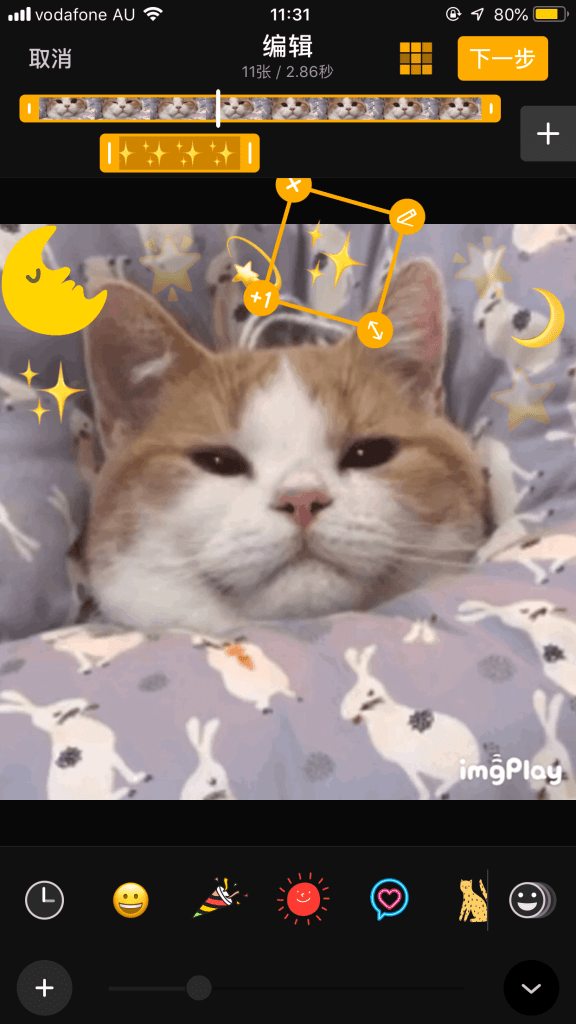
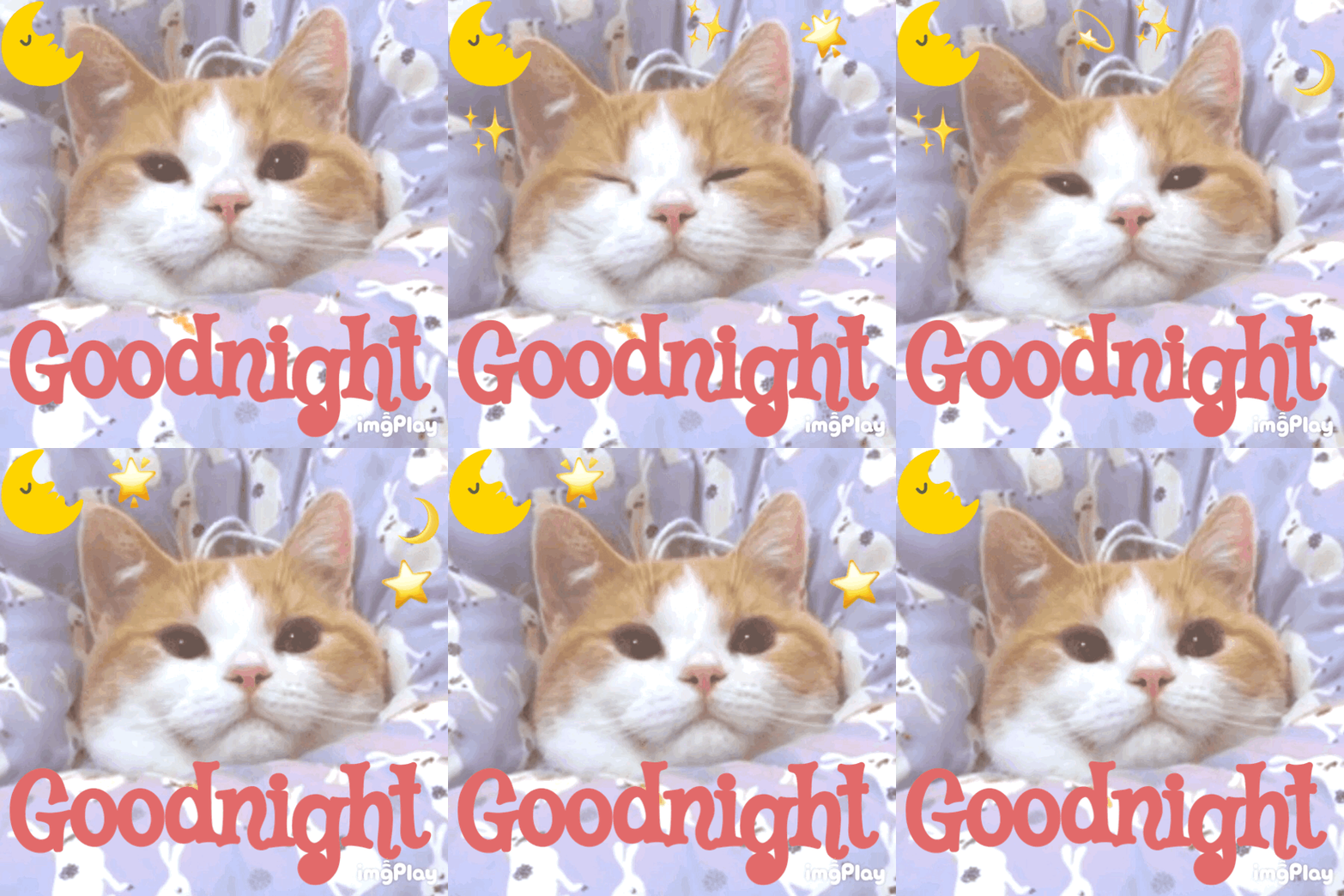
As shown above, I used the ImgPlay software to take a GIF image for my cat. I used this software for further editing, because I wanted to make it into a meme for chatting with friends on social platforms. Since this GIF image looks like the cat who is going to sleep, I wanted to make this picture in the place of the text “Goodnight”.

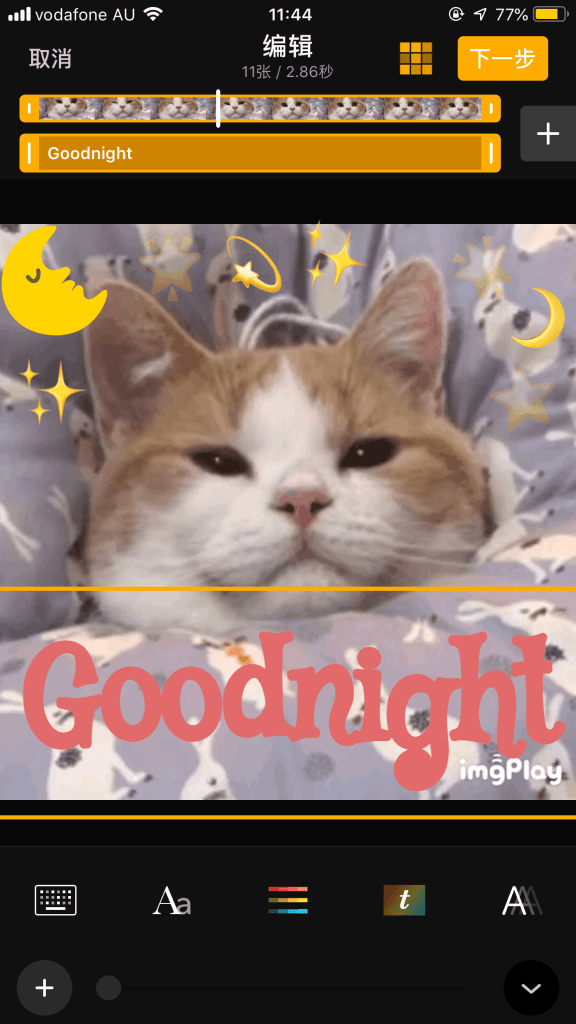
First of all, I clicked on the “Sticker” to add some stars and moon above the image. By controlling the appearance time of stickers, they can form a flickering effect.

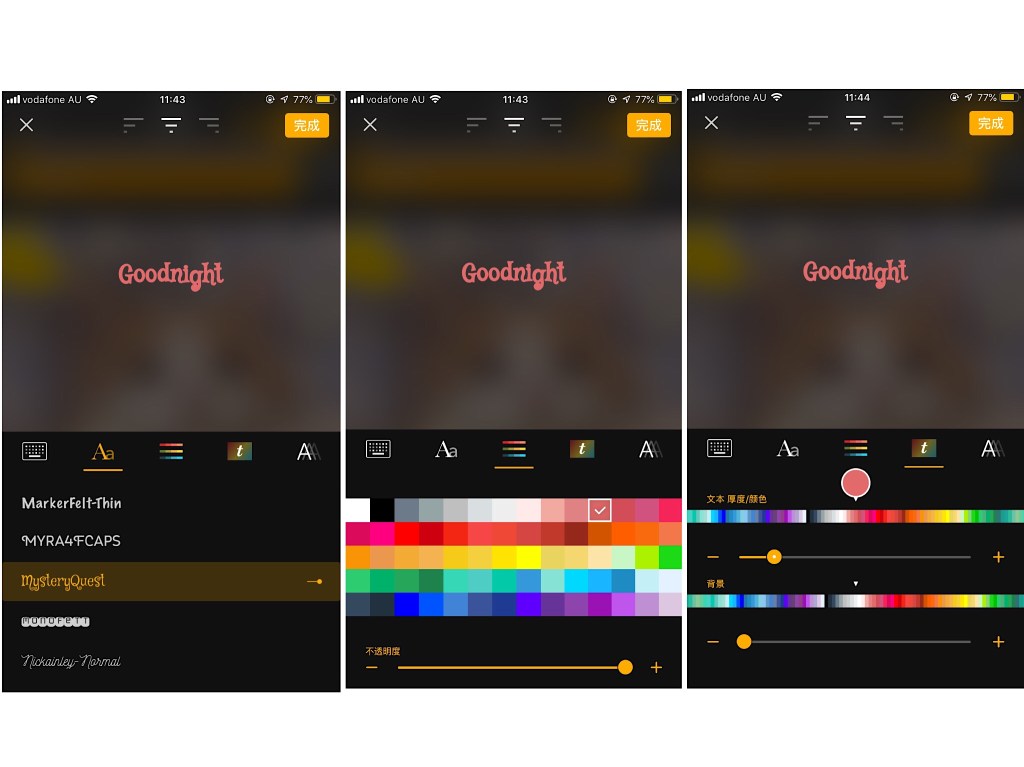
Then I added a “Goodnight” text, changed it into a cute typeface and chose a font color that looks comfortable. Moreover, I also adjusted the appropriate font size. I did this series because the text and content are continuously relevant (Lupton 2010, p.92). Therefore, we have to pay attention to text and typography.

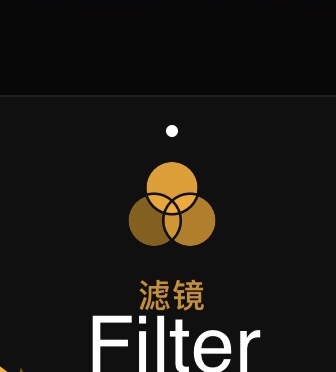
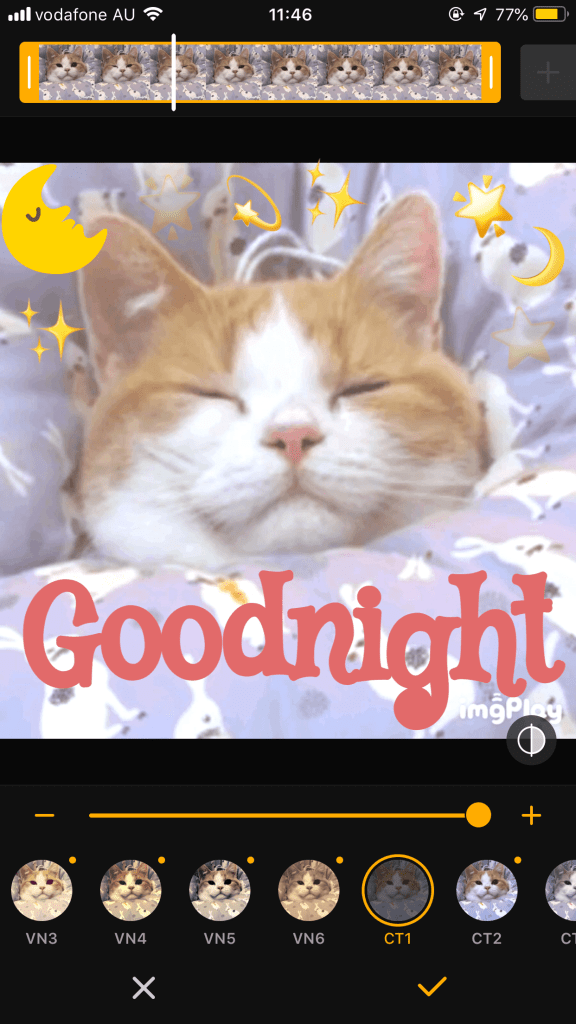
In order to make the image have a better rendering effect, I used the software to add a filter to the GIF image.

Final

After that, this picture was done. Although the process of this GIF image looks easy, it is full of knowledge and skills in digital literacy. In addition, I believe that mastering digital literacy skills is one of the important factors for the success of the contemporary generation.

In this digital age, people can process post-production through their mobile phone or computer, which are easy to operate and carry. We can unobtrusively capture and process images by using micro-cameras (Bate 2013, p. 81). It also means that we don’t need to buy professional cameras, film and other types of photography equipment, so everyone can play a role in cultural production (Benkler 2006, p. 276).

Overall, a file in GIF format is not only easier to access than video but also more vivid than text, which is more conducive to the emotional expression on social platforms.

Reference

Bate, D. 2013, ‘The Digital Condition of Photography: Cameras, Computers and Display’, in M. Lister (ed.), The Photographic Image in Digital Culture, 2nd edn, Routledge, New York, pp. 77-95.

Benkler, Y. 2006, The Wealth of Networks, 4th edn, Yale University Press, London, pp. 186-324.

Lupton, E. 2010, Thinking with Type, 2nd edn, Princeton Architectural Press, New York, pp. 85-100.

Submission 1 – [Digital Publishing]

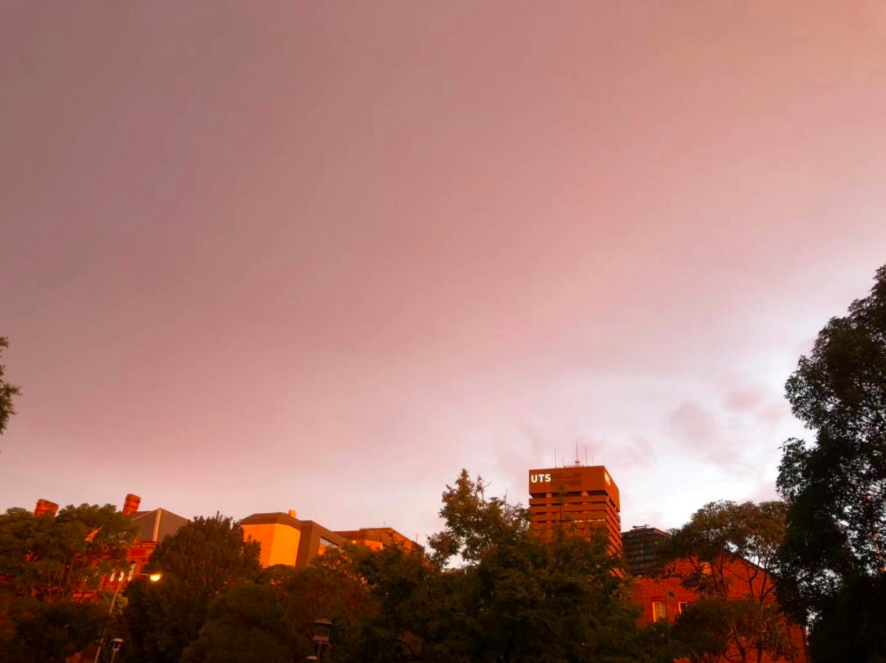
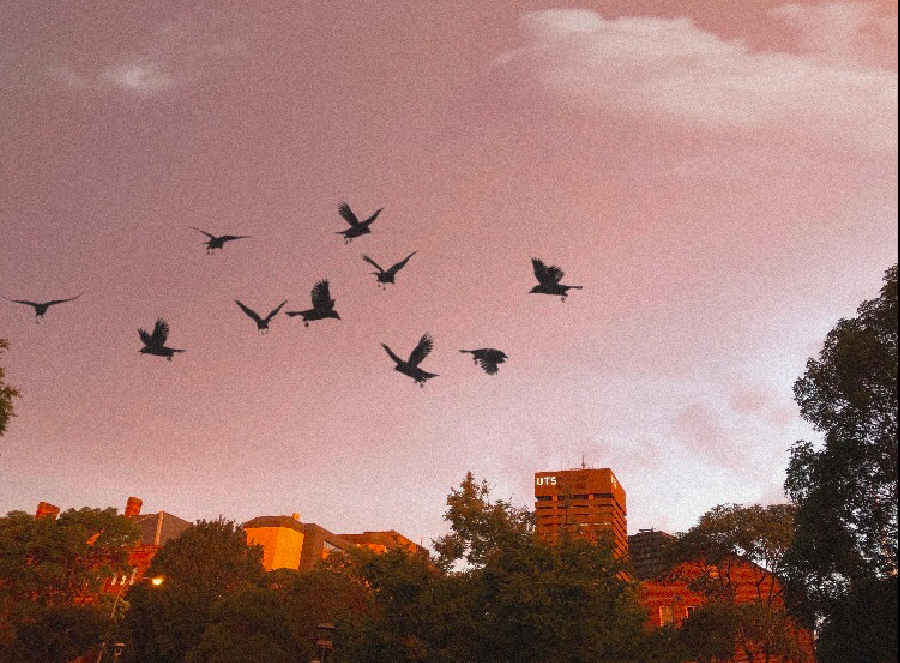
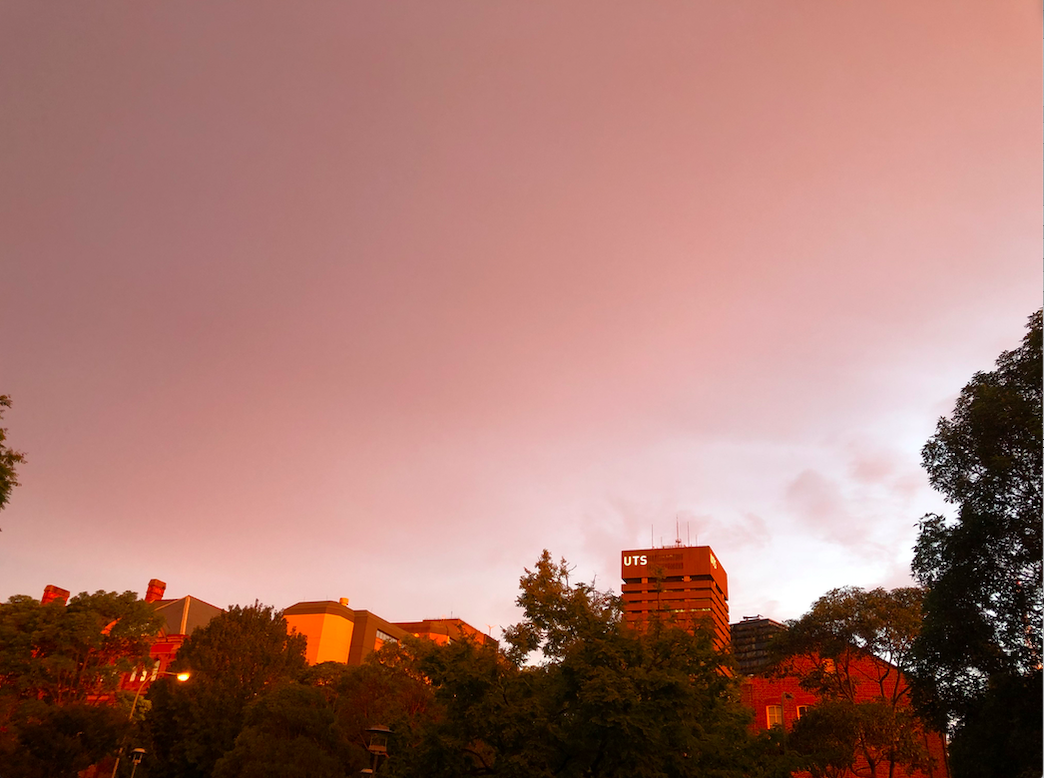
I took this picture at dusk one day, and then I used the “PicsArt” software to manipulate and synthesize a photo that I think is pleasing.

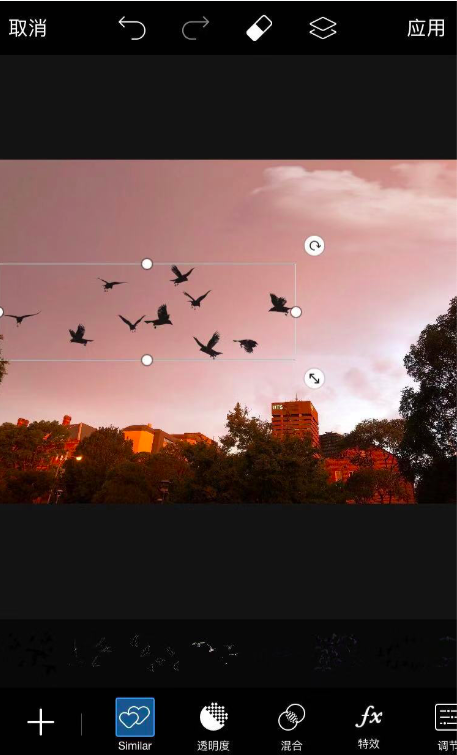
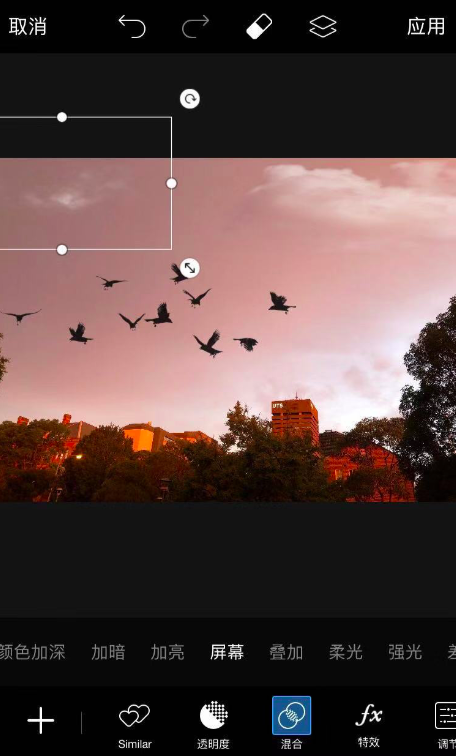
First of all, my aesthetic thought the sky is a little bit empty, so I clicked on the ‘sticker’ and searched for the cloud, then I picked a cloud that looks real and matches my picture. In order to ensure that the sticker and the picture better blend, I also adjusted the ‘mix’ that can change the brightness of the sticker. At the next step, I used the same method to add a bunch of birds in the sky, and by stretching the proportion of the stickers that make the sticker and the picture look harmonious.

In addition, I considered the whole picture is not very coordinated, so I also found a similar small cloud sticker by clicking “similar”, then I added it to another vacant place.

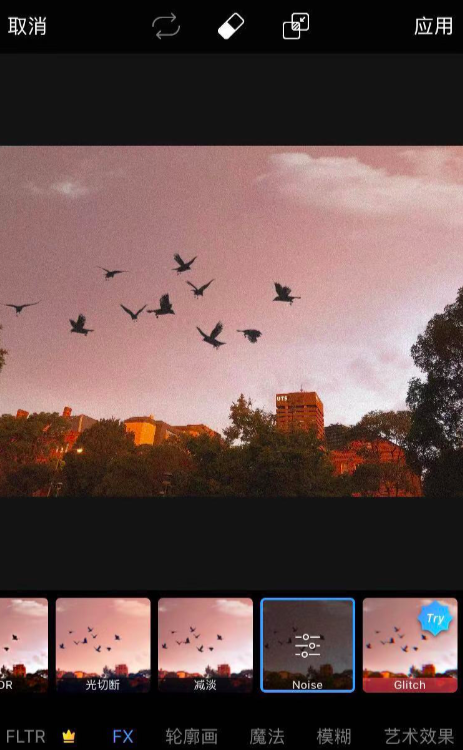
At last, I used a filter tool to create a narrative atmosphere for better visual effects.

finally picture

In the process of processing my pictures, I felt that even a minor detail will give readers a different feeling, so after my creation, this image shows a high-quality texture and convey a melancholy mood.

Moreover, I used and combined different image processing tools and constantly improved the embodies the multimodality of this picture, I simultaneously learned the importance of digital literacy to the media. On the other hand, copyright awareness of digital images is equally important, if someone uses my picture, he needs to make a correct reference, but it is best to get my authorization. All in all, an excellent production possesses an aura because it has a layer and texture that convey an energy or emotion.

Reference list:

  • Ng, W. Can we teach digital natives digital literacy. Computers & Education, 59(3), 1065-1078. (FOCUS ON PAGE 1066-68)

What is digital literacy?

Our tutor put forward and explained the CDLC course core content – ‘digital literacy’ in last week, but before that I am not clearly understand what it specifically means. Through this class I learned that digital literacy is doing something in digital form, such as compositing pictures and making videos. 

There is no doubt that we almost use digital literacy skills every day, it not only helps people stay in touch with others but also promotes the diversity of educational development. Moreover, people can share experiences and knowledge through social media platforms.

After class, I read a recommended reading material on the Canvas to further understand digital literacy. Therefore, I know that digital literacy can purposely help people grow their knowledge and create value in economics, culture, and education ( Hartley, J. 2009, p12). However, digital literacy does not replace traditional literacy methods, and the use of digital literacy skill can be realized only if tradition literacy has already been learned. 

In addition, digital literacy is crucial in our daily life, because this skill can collect and analyze big data, manufacturers or retailers can make critical evaluates and improvements based on the data. In order to comprehend digital literacy better, I still need to read more related materials.

Reference:

Hartley, J. 2009, The Uses of Digital Literacy, St Lucia, Qld, University of Queensland Press, Sydney, pp.1-38.

<https://find.lib.uts.edu.au/?R=OPAC_DRR_42572>

<

Design a site like this with WordPress.com
Get started